
Oh, What a World
A long walk with an unexpected but not unwelcome finale.

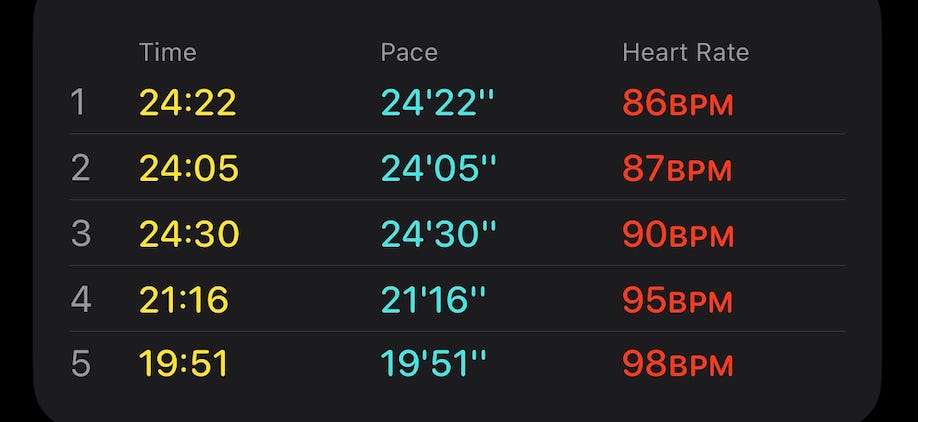
Many mornings, I take my Husky, Koda, out for several miles through my little town of Corning, New York. We walk down the Walnut Street hill on the Southside, past Canfield Park. We turn right and head east along the brick sidewalk of Market Street’s shops, turn left through Centerway Square, then head west by the river next to the glamorous Japanese Gothic headquarters of Corning, Inc. We continue over Bridge Street, past Wegmans, then down a dirt road and along a little-used railroad line to the Pink Box. The Pink Box is not a strip joint. It’s an actual pink milk crate someone left next to the railroad tracks. It’s our turnaround point. The entire journey is around 6.5 miles. I usually track it on my Apple watch, which takes a little of the romance out of it, but helps me stay fit or something.
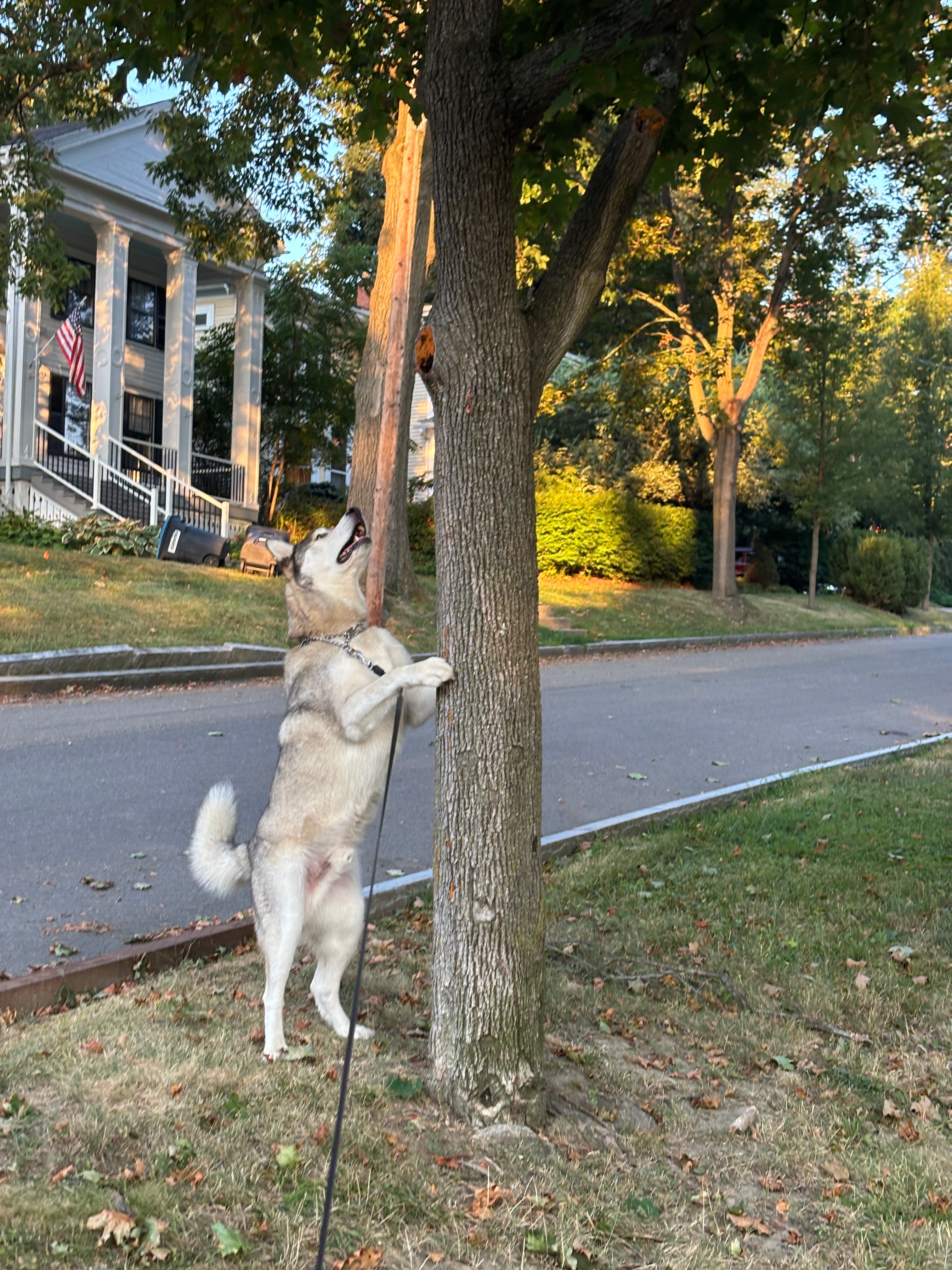
I love the ritual of my walks. Here in Corning, I make coffee with an Aeropress: three scoops of coffee, two layers of filter paper, water heated in the green teapot on the stove until the kettle whistles. I take the same nine things every time: boots, hat, sunglasses, phone, AirPods, wallet, keys, leash, collar. Koda wears a prong collar, so he doesn’t yank my arm off when he sees a squirrel. Every morning, I have to corner him to get it on. I always win; he never surrenders.
For me, these walks are about deepening, a groove. Everywhere I have lived over the past decade, I’ve picked out a route, developed a routine, and run through it hundreds and hundreds of times. Walks are not about figuring things out. They’re about walking.
We walk in all kinds of weather — winter mornings when the wind makes my face feel like it’s being rubbed with sandpaper. Perfect upstate New York summer days with fat white clouds floating in the blue sky. Driving rain. Heavy, humid summer heat, which is particularly hard on Huskies — on those days, I let him swim in the river several times. We see eagles, deer, ducks, a bear (twice), a porcupine, and to Koda’s endless frustration, squirrels, none of which I let him chase. He does, however, his best.
Long walks have become one of the organizing structures of my life. I began years ago, walking along West Cliff Drive in Santa Cruz with the woman I was dating at the time. We’d agree on a time, she’d roll up in her car and off we’d go, over the San Lorenzo River, past the amusement park and the pier, up a little hill by the Dream Inn, and then onto the sidewalk. On one side was Monterey Bay. On the other, the glorious, silly mess of Santa Cruz, California.
Later, I did laps around Garland Ranch in Carmel Valley, Koda swimming in the Carmel River on hot days. Now, back home, we walk along the Chemung River. Somewhere along the line, walks stopped being exercise. Or rather, exercise became the least important thing about them. For me, they’re also a kind of consciousness reset.
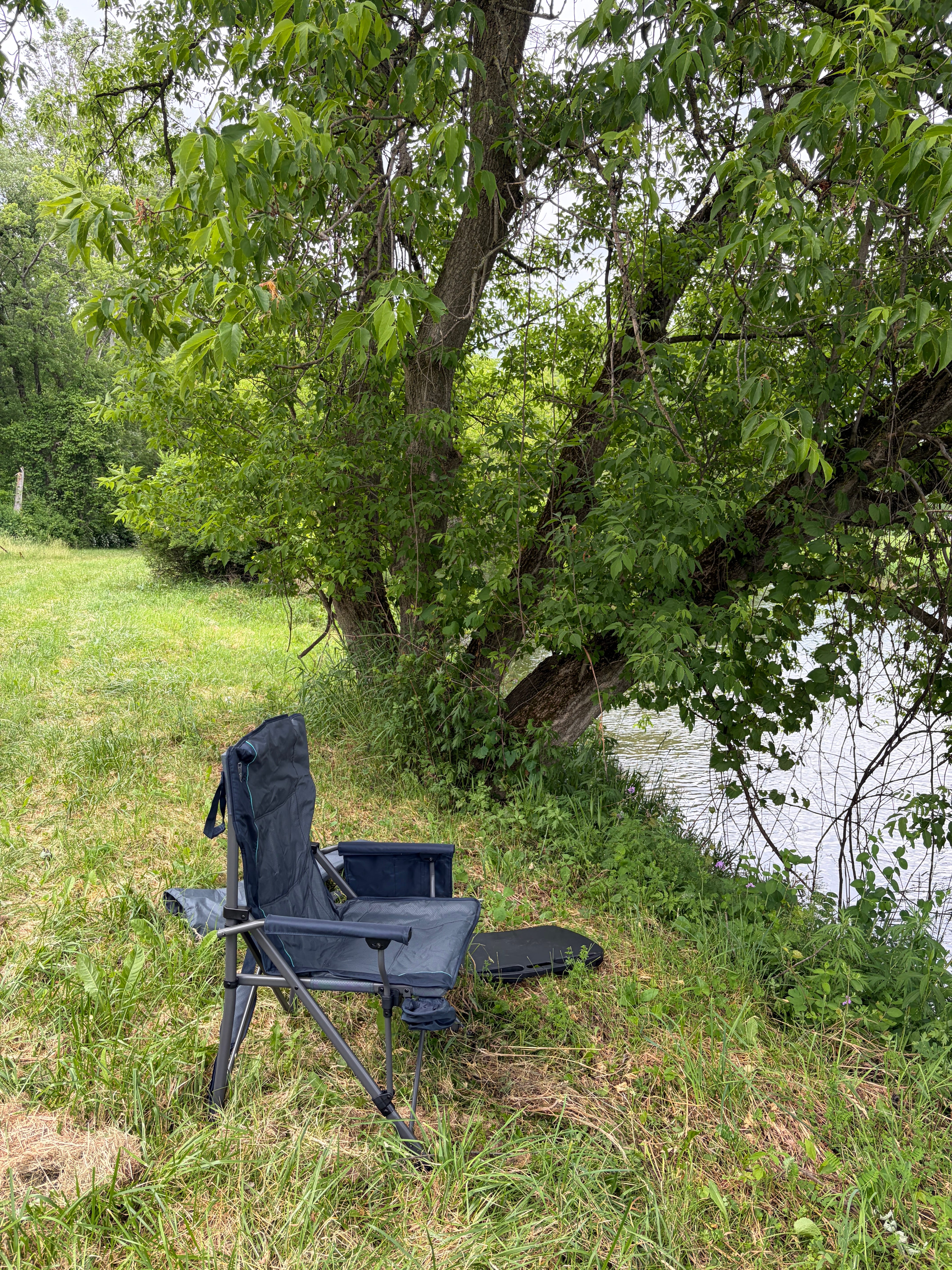
I’ve been thinking about this kind of stuff recently. I’ve been back home for about eighteen months. My life, like my walks, has settled into this very deep, very quiet, repetitive groove. All the rackety, pushy shoving and wanting and expressing that occupied most of my life has been replaced by a camp chair next to the river where I now like to work when the weather’s nice. My life in this respect is a lot more like my grandfather’s than my daughters’. Nothing is new, which is new.
Modern human beings have devolved to live in a nearly continuous state of interruption. Something always demands our attention. We wake up and immediately consult machines about what other people want from us, often while still in bed. Email. Text messages. Slack notifications. Social media. News alerts. Calendars. The psychological experience is one of permanent reactivity. Attention becomes chopped up into tiny, disconnected units, like an onion being minced on a cutting board, with a stiff dose of anxiety thrown in at no extra cost.
More significantly, we stop thinking long, slow thoughts because the environment no longer permits them. We either chase dopamine hits, or get locked into fragmented, repetitive, yes/no, good guys/bad guys binary tail-chasing. While that suits the machines and algorithms that are in charge, I don’t think it’s how human beings should experience things, or at least not the only way. We are also supposed to operate in a much more diffuse, shifting manner over longer periods of time. Some things, particularly bad things like grief and loss, take a while to understand, or are more about emotion and memory and pattern recognition than the quick answer the Internet feeds on. In that sense, it feeds on us.
You can feel the mental corrosion physically after a while, if you stop and pay attention. A kind of buzzing fragmentation. Anxiety without object. Constant vigilance. The sense that somewhere, just outside your awareness, something requires your immediate attention. It feels less like someone yelling at you than being poked with a stick at random. You’re always just a little nervous.
Everyone, of course, pays lip service to this observation, and always has. But I actually did something about it. I left. I moved to the country. And since that’s where I’m from, I like to think that gave me some kind of advantage.
More specifically, because I grew up in the country, I received unbidden a bedrock calibration to a whole different sense of time. Country people really do have sitting on a porch with a beer looking out over the landscape and doing nothing baked into their DNA. I remember entire summer days as a boy spent doing absolutely nothing — anchored on a raft in the middle of the river, dreaming, watching clouds and water and wind for hours, simply abiding. I think that is a better way to spend your time than hoping/fearing/wondering what the next damn email is going to want from you.
The remarkable thing about long walks is that they support this state without demanding anything dramatic in return. You don’t have to grit your teeth, or meditate, or anything. No matter how rackety your head is, a palliative, if not a cure, is always at hand.
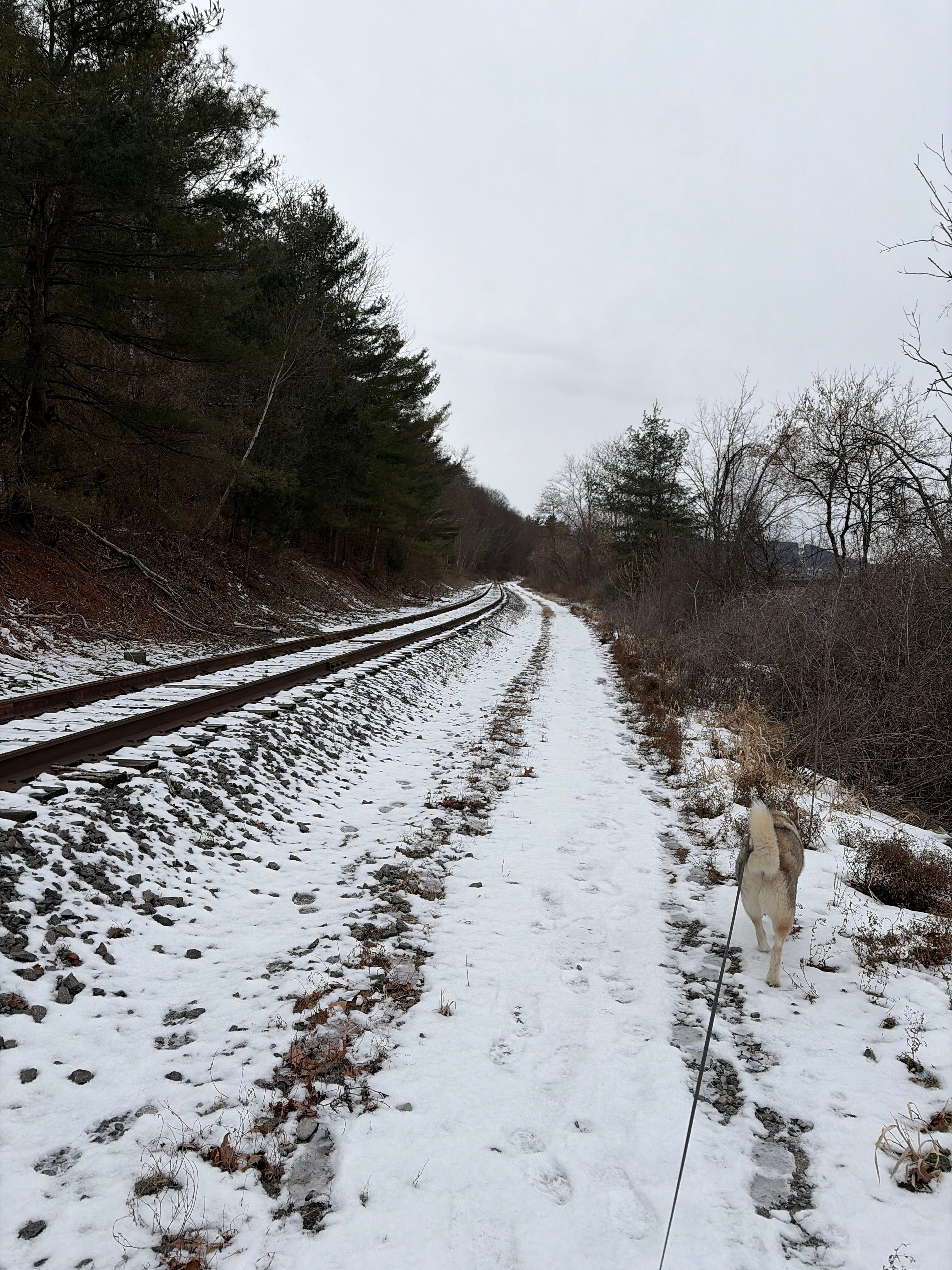
You just walk.
The first part of the walk is always a little fragmented. Koda has to do his business and sniff at everything. I want to get moving and the damn dog needs to research every creature that’s peed on every telephone pole in the last 72 hours. After a mile or two, though, something begins to loosen.
One of my grandfathers, who I never knew, was said to have something of a drinking problem. I’ve been told that every day after work, he’d come home, sit at the kitchen table, and drink until “something in his head let go.” Walking does it for me.
The internal static begins quieting down. Thoughts stop colliding with one another quite so violently. Problems that appeared hopelessly tangled at a desk begin quietly reorganizing themselves somewhere beneath conscious effort. My boots go over gravel, rocks, mud, grass. Depending on what time I’m out there, the factory whistle blows deep in the valley. I’ve heard it since the day I was born. It’s an old friend.
I know every inch of the route by now, and can play it like a bartender in an old Western saloon plays that upright piano. I know where I can stash my coat if I’ve guessed wrong about the weather, where seasonal streams run that Koda can drink from, where someone’s put a firepit and log seats next to the river, where the ice builds up in winter and the footing gets treacherous. There are all kinds of memories attached to the landscape. Here is where I slipped on ice and landed on a football-sized rock on my right thigh, which is still numb sometimes. Here is where Koda saw a bear. Here is where he tangled with a porcupine.
Walking allows thought to become migratory. Things drift forward gradually, often indirectly, or float around like dust motes in a sunbeam. The mind ranges farther. Connections emerge sideways rather than linearly. On a walk, my mind is more like a lava lamp than a laser beam.
Thinking, of course, doesn’t stop, it just shifts its ground. I think unconsciously, subconsciously, without thinking about thinking. I have had business ideas emerge on walks that never would have appeared in front of a computer screen. Relationship insights: she didn’t love me because I couldn’t provide what she needed, even though it was unfair or impossible.
This morning I was listening to Patriarch, a biography of Joseph P. Kennedy. And for the first time I really understood a little of how complicated, maddening and scary it must have been to try to keep the Western world from tearing itself apart in 1939. I didn’t learn many new facts, but I appreciated something. I do a lot of appreciating on walks.
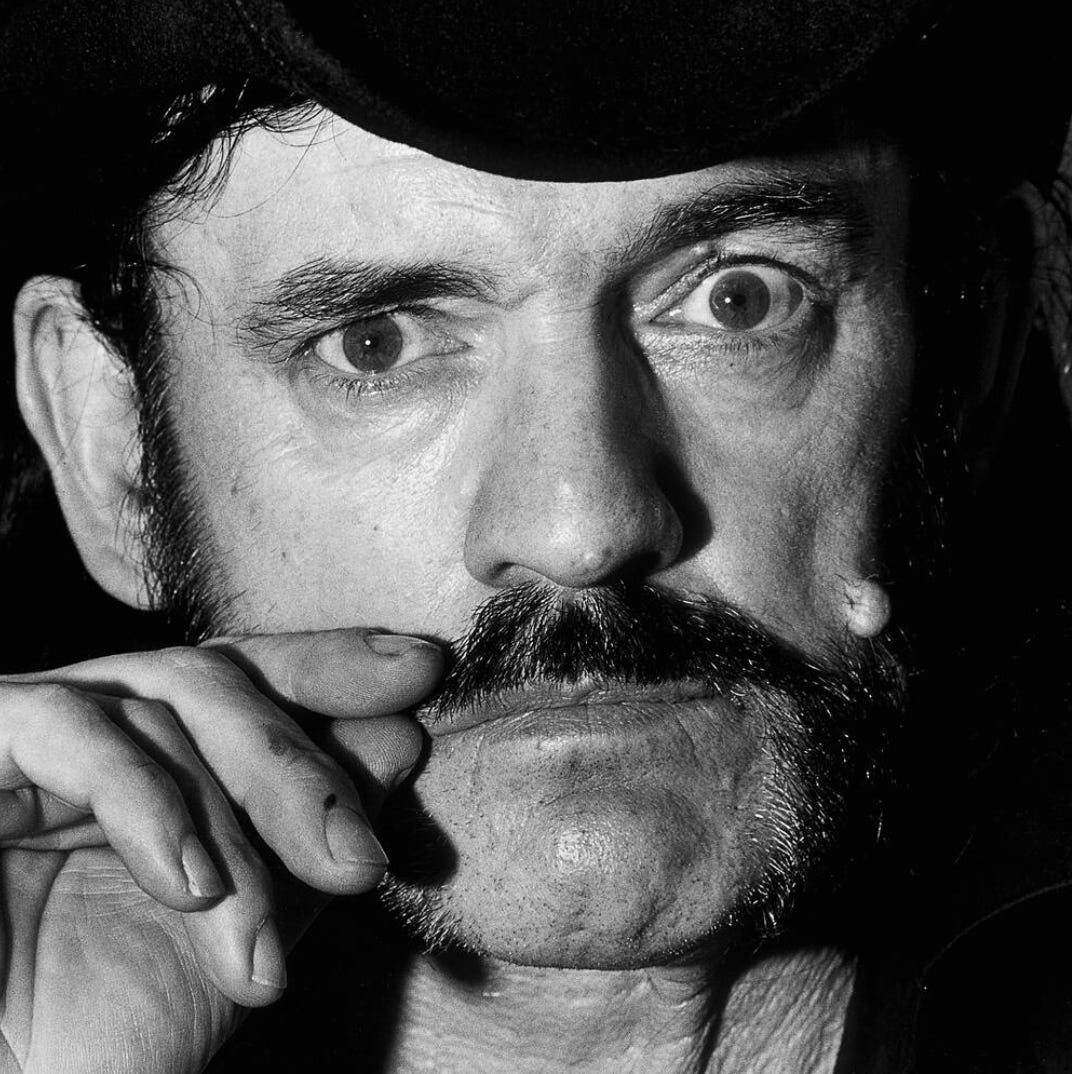
During difficult periods of my life, I have often discovered that what felt emotionally unbearable indoors became manageable outside in motion. Not solved. Not erased. But metabolized. Sometimes feelings need to be digested and processed. I can bear to think about things walking that would be too painful inside the four walls of my house. For example, I processed some of the agony of my permanent separation from my daughters decades ago by loading a backpack with rocks, and hammering through hilly trails for hours in the hot sun listening to Motorhead’s Inferno album at earsplitting volume. Lemmy Kilmister was my therapist.
Modern culture tends to imagine psychological growth as a kind of sudden revelation — a breakthrough insight after which everything changes permanently. The Big Emotional Reveal. In reality, many emotional truths become tolerable only gradually, through repetition, distance and time. You walk with them long enough that they stop feeling red-hot or radioactive and eventually begin feeling like part of the landscape.
I have increasingly come to believe that many people are not exhausted because they work too hard. They are exhausted because they never quite stop reacting. Their minds remain permanently on call, even in silence.
Walking breaks the spell. Not permanently. The world is waiting when you return. The inbox still exists. But the walk creates temporary distance from the machinery. And often that distance is enough to restore agency, to allow you to handle what’s waiting when you come back. Not escape from life, but reentry into it on more conscious terms.
This morning, Koda and I walked along the river under low gray clouds while the town slowly came awake around us. Traffic increased. Storefront lights flickered on. Somewhere across the water, someone was hammering on metal. The geese had returned. Spring arrived slowly in upstate New York this year.
We walked for nearly two hours.
There was one more lesson. This, I think, is the big one.
The last segment of the walk was up the hill on Pine Street. I’m officially tired at this point. I could feel my hamstrings burning. My boots were tight, which is a blessing, but sweat was accumulating in my hat. My breathing, which had been easy for the past two hours, became a little labored. My heart was working.

I was listening to a lovely Kacey Musgraves song, ‘Oh What a World.’ It’s one of her tributes to how wonderful it is to simply be alive, which is something we all, I think, forget about. She has an incredible voice — pure, clear, dry, with just a hint of Texas twang. She can hit any note she wants, and do whatever she wants with it. The lyrics celebrate, among other things, the natural world, fish, stars and love, punctuated by a simple banjo break that reminds me that really great musicians have a passionate, ongoing love for the sound their instruments make.
And, as happens every once in a while, the tears came from listening to this young woman I’ve never met sing. Another feature of walks is that they allow some emotions that need to, to sink in, to do their work. It’s admittedly a little silly to write about dissolving into tears over a pop song, but looked at a little more charitably, evoking emotion is Musgraves’ job, and perhaps feeling them is mine. The words hit home. I stop. Koda stops and looks. Written out, song lyrics usually lose their impact, but still:
Northern lights in our skies
Plants that grow and open your mind
Things that swim with a neon glow
How we all got here, nobody knows
Dogs see it all from their position on the ground — sex, fights, joy, grief, coming home drunk or, this morning, having to wipe your eyes because the sheer magic of going for a walk washes over you like a rogue wave. This body, this place, this time all somehow incredibly came together to allow me to experience the utterly astounding, life-enhancing and completely improbable act of going for a long walk, and pushing up the final hill. How the hell did I get so lucky? I could have been a slave in China, or an amoeba, or in a wheelchair or any of a billion other destinies. Instead I get to walk up this hill in this pretty little town listening to music and thinking. Dogs see all this stuff, and on some canine level, I think they understand. Or I hope they do, or wish they did.
And they never tell a soul. There’s that “quiet” again. I need to think about that.
You always bring memories of Corning back to life for me. As I read your essay I could visualize the walk down Walnut to Market Street, over to Centerway, and then up to Bridge Street. Thank you
Love this article. I still hear the Corning whistle in my mind. Miss my hometown.