
With My People
A country funeral with commentary by Talking Heads

It’s been a over a year.
Last November, I put Koda into the car, rolled down the driveway onto Echo Valley Road in Salinas, California (the road sounds a lot more enchanting than it actually is) and began the 2,823-mile drive back to the town I grew up in. Because driving through Wyoming in November in a small car seemed like a really stupid idea, I headed south, then east -- through Barstow, Gallup, Amarillo and so on. Barstow, California, by the way, is one of the ugliest places on the planet.
With that, my life in California officially ended. A little over a week later, I spent the night in the Radisson Hotel in Corning, New York, because I didn’t have a mattress. Then, bit by bit, I began to assemble a new life here.
Or reassemble, really. I’ve been thinking about that.

In 1980, when I was eighteen years old and heading off for college, Talking Heads released the album Remain in Light. It’s peak Eighties music. The album is one of their odd, quirky best, and features the song Once in a Lifetime. The video features David Byrne, in a slightly too-small suit and bow tie, sweating and jerking around as if he’s being electrocuted, looking like a 1950s accountant who’s in the process of losing his mind. If you’ve never seen it (looking at you, Vibrant Young People) you should – it’s amazing.
As I hear it, Once in a Lifetime is about a man who is in the middle of his life, and trying to figure out how he got there. He starts asking himself questions, which some genius created a great meme from:

Some of the lyrics:
And you may find yourself living in a shotgun shack
And you may find yourself in another part of the world
And you may find yourself behind the wheel of a large automobile
And you may find yourself in a beautiful house, with a beautiful wife
And you may ask yourself, “Well, how did I get here?”
I did all this stuff. The shotgun shack, I guess, was a fourth-floor walkup in Spanish Harlem right after college. The other part of the world was Singapore, Hong Kong, Malaysia. The large automobile was a BMW 5-series and the beautiful wife (in my case, girlfriend) was an actual debutante, educated in Switzerland with table manners that made me feel like Mongo from Blazing Saddles by comparison. All that is over now.
When I left California, I had remarkably few ties to anyone, or anything. My parents were both dead. I was, and am, not close to my siblings, one of whom I haven’t spoken to in years. My daughters are scattered across the country, and have lives of their own, too. We don’t talk often. I have a career that was deliberately designed to be completely portable – I was a digital nomad long before it was cool. I didn’t own a house, or anything I couldn’t simply move. For a man who has passed through six decades of life, I had put down remarkably few roots.
And now, a year later, speaking of roots, I was back in the little town I came from. Well, how did I get here? I have so many questions, and so few answers. But I did come up with one.
To return to Once In a Lifetime for a second, the next set of lyrics reads as follows:
Letting the days go by, let the water hold me down
Letting the days go by, water flowing underground
Into the blue again, into the silent water
Under the rocks and stones, there is water underground
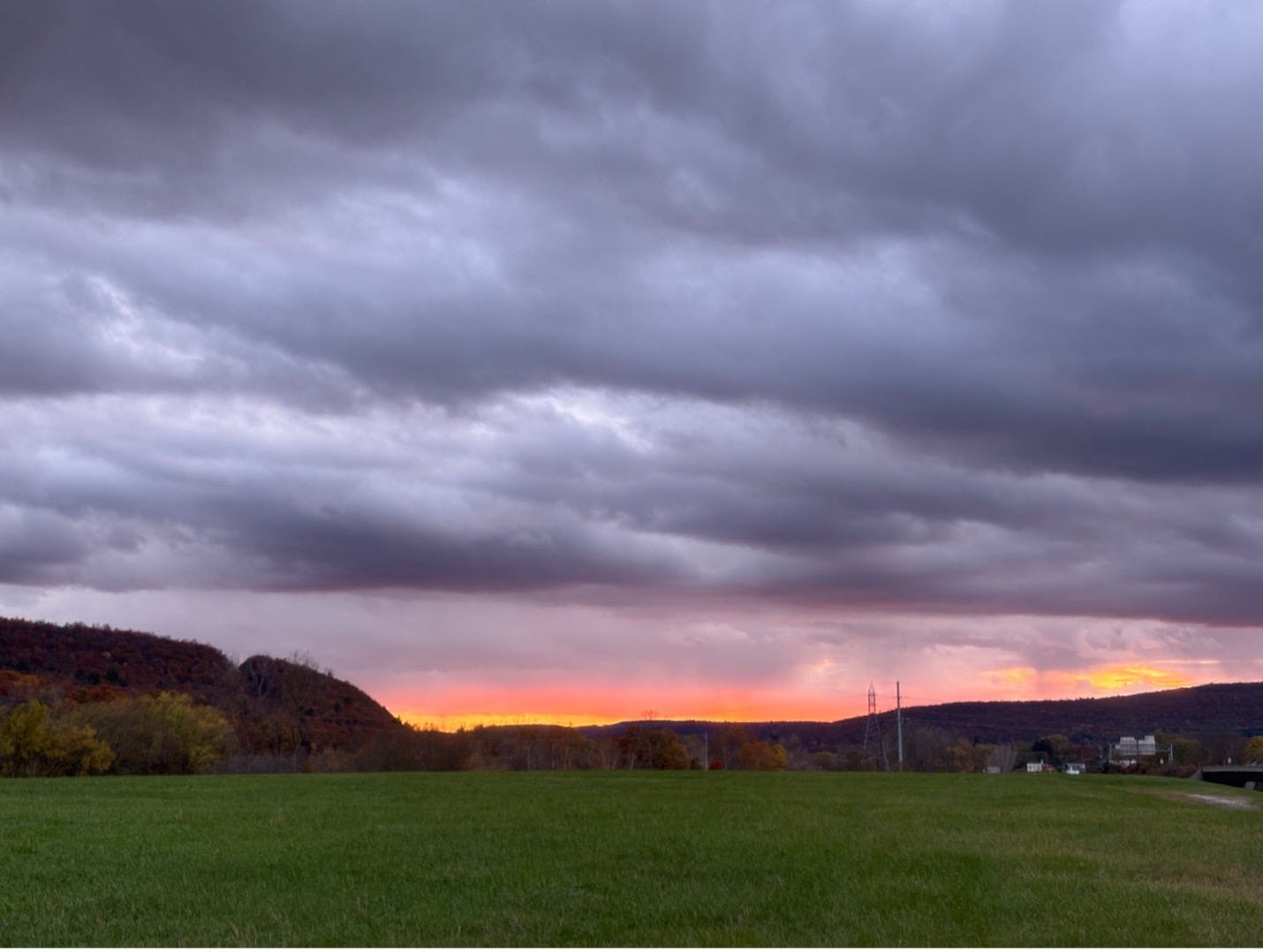
November is an especially harsh time in western New York State. Fall is so pretty – the leaves turn, the nights get chilly, and the lush, sexy green of summer changes into the elegant, forbidding poise of autumn. Winter, however, is about to walk through the door, and dish out four months of punishment. The sky turns grey, the wind picks up, and simply stepping outside seems like a bitter argument with Mother Nature, who is, of course, going to win in the end. As I write this, it’s 29 degrees outside.
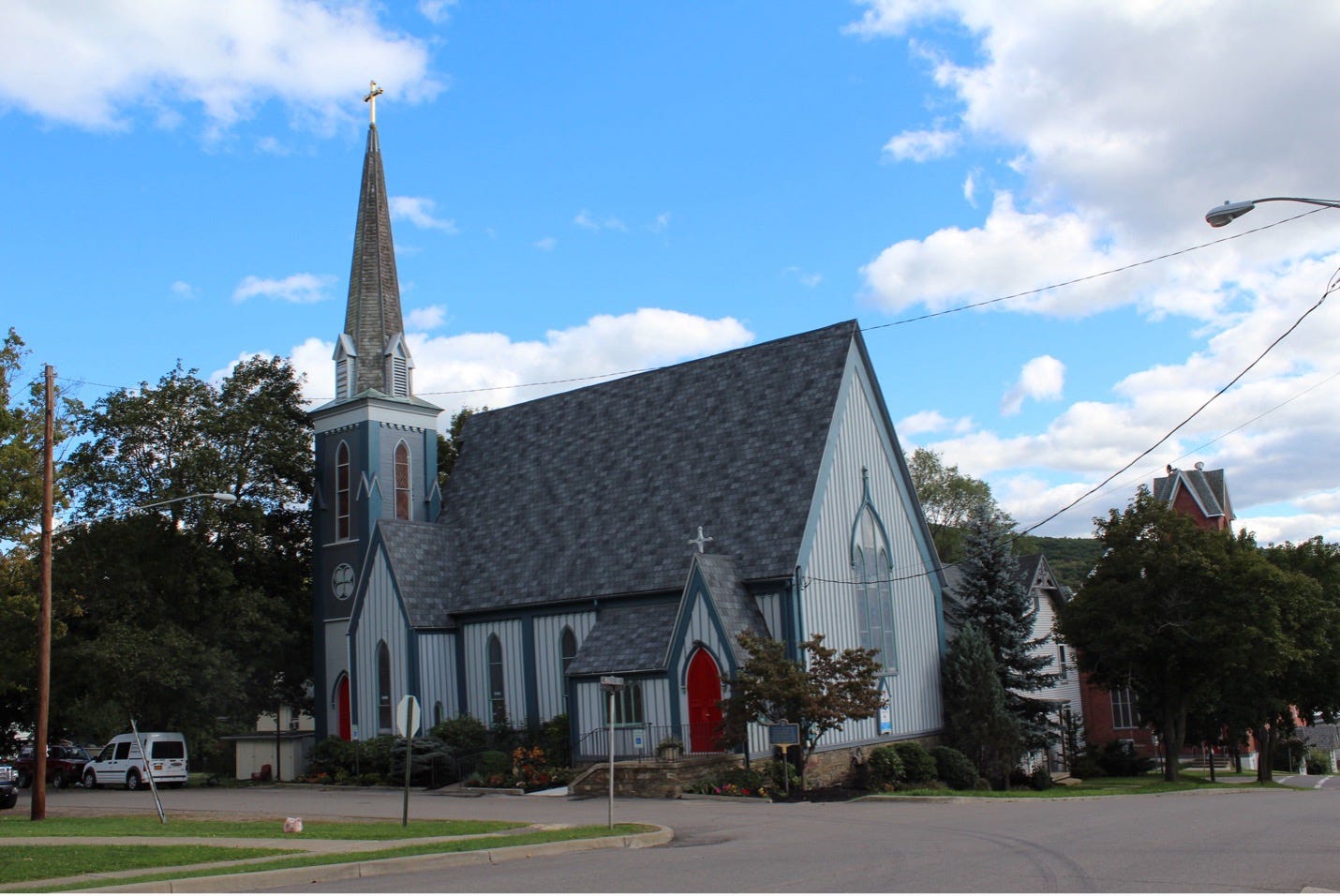
And on a November weekend, I had an especially challenging task: the funeral of a woman who had died way too young. Even worse, if that’s possible, she’d left her elderly, grieving parents behind. The funeral was at this past Sunday, at the Church of the Redeemer, in Addison, New York.
Addison is what my little town would become, immediately, if Corning, Inc. moved elsewhere. It’s a battered little rural village of around 1,500 people, with a main street that’s mostly empty, a quiet central square with three churches, a railroad line, the river, one restaurant, a crummy-looking tavern and a school. Oddly, the place is named after a nineteenth-century British essayist.
It’s tempting for people who have never lived in (or even near) a place like Addison to depict it as if it’s some kind of rural Disneyland, inhabited by Charming Local Characters and so on. There’s some of that, but there’s also poverty, meth, houses, at least one church that is badly run-down and a lot of hardship. The place is real.
To reach Addison, we drove for all of eighteen minutes, reached Wombaugh Square, and were immediately faced with the unexpected challenge of finding a place to park. The square was full of cars. Eventually we did, we walked into the church. It was packed. The ushers had run out of programs. We had to wedge ourselves into a pew.
Edith, the guest of honor, was not famous, or rich, or by any of the standards Facebook tells us are supposed to matter, much of anyone. Neither am I, by the way, or you. She’d led a quiet life, centered, it seems, around church, her parents, music and when she was younger, sports. She’d not married, had no children, and like a lot of people, was about to be committed to the earth from whence she’d come. However, she was also very much a part of the community, which had shown up for her with a vengeance.
The church, which had been there for 165 years, was pretty, but not remarkable. You could see by the scratches and scuffs on the wooden pews that thousands of people, over centuries, had worshipped there. The congregation was a mixture of elderly friends of Edith’s parents, and her younger friends. Scripture was read, including the story of Lazarus’s resurrection, which Edith had selected herself.
And he that was dead came forth, bound hand and foot with graveclothes: and his face was bound about with a napkin. Jesus saith unto them, Loose him, and let him go.
The choir sang. In a brief homily, the priest commented on how, after an enormity of suffering, Edith had now, like Lazarus, been unbound, and let go. Eyes were closed, prayers were said, grey heads bent as music filled the sanctuary. My companion wept, and I gave her my bandana, and put my arm around her shoulders.
Here’s what’s important: I stood in the little church, in my Brooks Brothers blazer, and looked around, and I was calm. Peaceful, even, the thing I suppose in Alcoholics Anonymous they call serenity. I was exactly where I was supposed to be at that moment, and I was doing exactly what I was supposed to do, which was simply to be there.
These people, and their ancestors (and mine) stretching back going-on-two-centuries, had gathered here thousands and thousands of times. They were my friends, my neighbors, my community. The goal wasn’t to soothe the agony of Edith’s parents, who sat together in the front pew, confronting the horrendous reality of losing a child. Easing that pain is impossible. But the point is this: they, and Edith, and everyone in that church were part of my community. I’ve learned that that simple fact is supremely important.
I did not have to do anything, or figure anything out, or be entertaining, or charming, or intelligent or prepared. I just had to stand there, quietly. I was there to witness, to be present, to represent a very small, temporary piece of an ancient, ongoing story. It’s not much, but it’s also everything.
One of a handful of absolutely solid things I know about myself and my life is that I am, and always will be, one of these people. I remember having a horrendous argument with a woman I was dating (the one with the table manners) about this once:
Her: You grew up in that place, but you’ve left. You’ve got an Ivy League law degree. You live in Northern California. You’ve done startups. You’re not that person anymore.
Me: Yes, I am. I always will be, no matter where I go or what I do. I just am.
I was right.
I have been gone for over 45 years, but I came back, and my place here hasn’t changed at all. I believe this simple fact is fundamental to whatever being human means in the end.
Talking Heads were right, too. The blue water falls from the sky, flows underground and into the river. The river flows through Addison, joins the Chemung River, and the Susquehanna, and empties into Chesapeake Bay and the Atlantic Ocean. We can stand at the edge of the ocean, at the place where land and water meet, and take it all in. The sun eventually lifts it into the sky, and the entire cycle begins again.
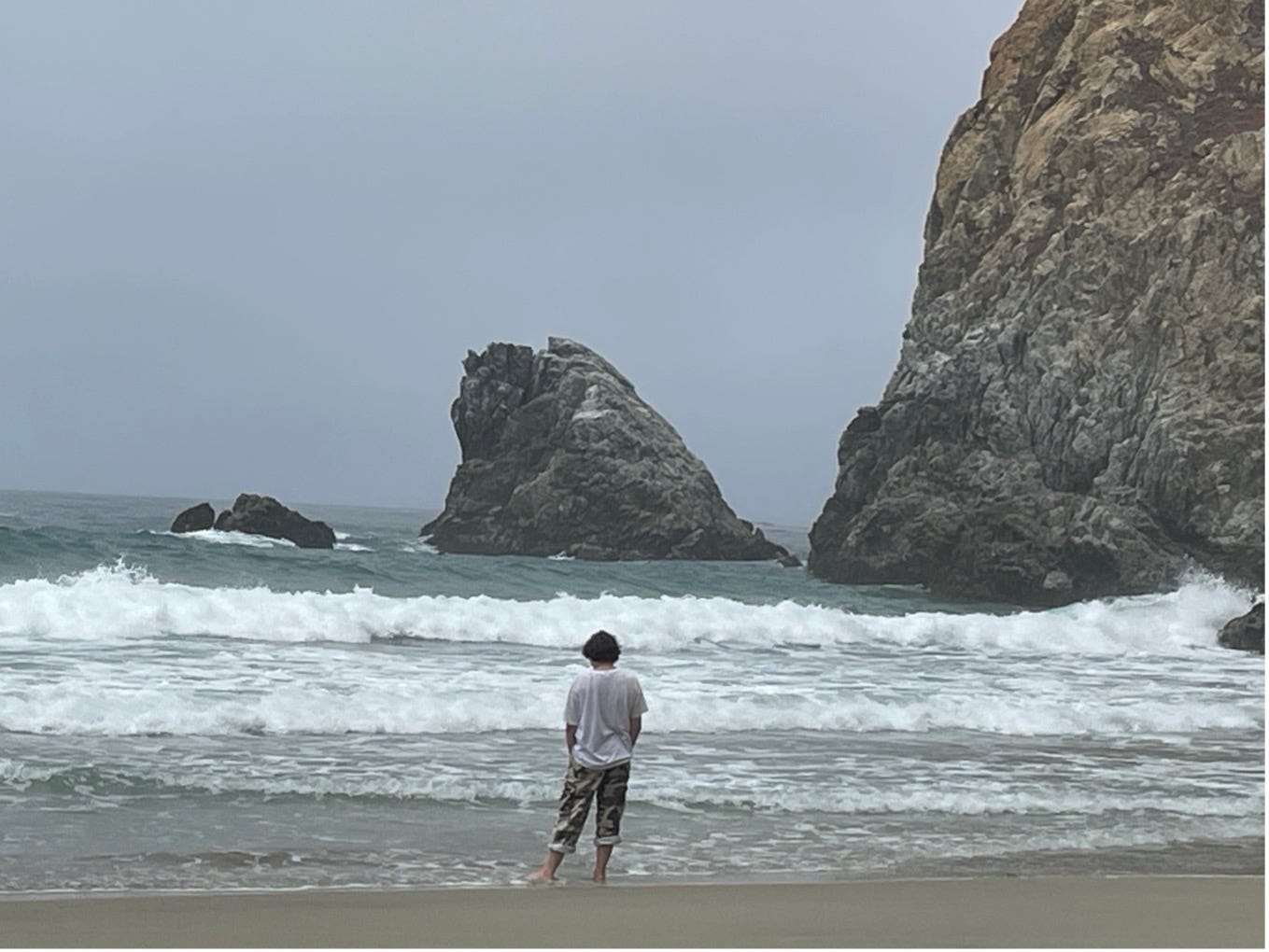
All the rivers run into the sea; yet the sea is not full; unto the place from whence the rivers come, thither they return again.
Underneath all the shucking and jiving, the opinions and feelings, the possessions and desires and battles, all the stuff that comes and goes, there’s transcendent power in people simply being with one another. Perhaps the only power people have, the only meaning. I can’t define it or defend it or measure it or describe it, but after the twitchy, shiny, carnival ride of California, I found something immensely right in standing up for Edith with my community. I can’t tell you what it was, but I can tell you it felt very, very appropriate because it was. Just standing up. That’s all.
That’s all I know. That’s all I need to know. Merry Christmas, by the way.
This was a touching read. Thank you! Happy New Year 💕